Wednesday, November 8, 2017

The Ivory-billed Woodpecker-Lauren Chun

THE IVORY-BILLED WOODPECKER
       (The Vanishing Bird)
             Lauren Chun Bio-227 Fall 2017


Ecology and Description:
The Ivory-billed Woodpecker, also known scientifically as Campephilus principalis was originally found in the old forests of the southeastern United States and in Cuba. This bird fed on insects, mainly beetle larvae, and occasionally fruits and nuts. This bird is named after its enormous ivory colored bill that allows them to strip bark from dead trees to get their food (the beetle larvae). To survive, these woodpeckers need a vast habitat of mature, developed forests with many dead trees with bark that can easily be peeled off. Compared to many other woodpeckers, this species cannot fly as well. Their flight is rather strong and direct. There have been few studies of this species, but many ornithologists ( bird experts) believe that the birds are nomadic. This means that they are always in search for new, suitable habitats instead of staying in one location. Ornithologists also speculate that these special woodpeckers may live as long as 20-30 years! This species is so rare to find that, fun fact: it hasn’t had any pictures taken of it since the 1930’s and there are now only a few pictures of it today! Many thought that the species was already extinct years ago! (birds.cornell.edu) 


Geography and Population
The Ivory-billed Woodpecker once ranged from east Texas to North Carolina, from southern Illinois through Florida, and south to Cuba. Many believed that there was no longer a population of these birds around anymore, but in 2004 a shocking discovery was made. In 2004, a single male woodpecker was found roaming Cache River National Wildlife Refuge in the Big Woods region of Arkansas. Today, less than 10 percent of Arkansas’ original 8 million acres of forested wetlands remain. Because of the little resources left, it is unknown if the Campephilus principalis are alive and if so, where they dwell. (birds.cornell.edu) Below is how the Big Woods is today.

Listing Date and Type of Listing:
Since 1944(with no specific date), this species was thought to be critically endangered or even extinct. Currently the Ivory-billed Woodpeckers are listed as “critically endangered” and “possibly extinct” by the International Union for Conservation of Nature. The American Bird Association lists the Ivory-billed Woodpecker as a class 6 species. This is a category that is defined as “definitely or probably extinct.” Although many believe that this woodpecker no longer exists, it is still an intriguing and ongoing theory. There have been at least 10 recent reported sightings/hearings of the Ivory-billed woodpecker, but no one has officially confirmed any of them. (nrl.navy.mil) Bellow is an image of what some researchers may believe could be an Ivory-billed woodpecker.


Cause of Listing and Main Threats to its Continued Existence
There here has been a reduction of suitable nest trees as well as an indirect destruction of their food source because of scaled logging and conversion of their forest habitats. There were many hunters, trappers, and commercial collectors during this time. The direct hunting and killing of Ivory-billed Woodpeckers could have been the primary cause for their decline. (fws.gov) Although it has been seemingly endangered for a while, no one really counted it as endangered/possibly extinct until the 1960s. This means that there has not really been a huge effort to protect this species as much as there has been for other endangered species. Today, one of the main threats to the species existence is the swampy habitat that these birds are assumed to be located. Because there are no longer mature forests and dead trees for the birds to get beetle larvae from, this species, if it still exists, is in extreme danger.

Description of Recovery Plan
The current strategy is to focus on locating and confirming the presence of individuals.Then, knowledge will be added about the ecology and biology of the species, providing a feasible approach to habitat protection. The goal of this recovery program is to locate, protect, and increase the hopefully existing population until it is no longer endangered or threatened and ultimately removed completely from the Federal list of threatened and endangered species. The total estimated cost of recovering this species is unknown at the time because of the limited knowledge concerning its occurrence, distribution, and long-term actions(fws.gov).

What can you do to help?
Because the existence of the Ivory-billed Woodpecker is unknown, it is difficult to already have ways for the interested citizen to participate in its recovery process. But, something that could always be done is donations. Many different organizations (such as the Cornell Lab of Ornithology and the Naval Research Laboratory) and scientists are still trying to find individuals and helping to finance these searches is the current most effective way to help this cause. Another thing you can do is make sure you are always up to date with the search teams evidence and analysis so that you can be aware and inform others around you about this cause. Below are some websites that will help you gain knowledge about the ghost bird: the Ivory-billed Woodpecker.


Citations


“Cornell Lab of Ornithology.” Ecology and Behavior — Ivory-Billed Woodpecker, 1 Nov. 2005, www.birds.cornell.edu/ivory/aboutibwo/life_ivorybill_html.


“Extinct or Not? New Study Claims 'Extinct' Ivory-Billed Woodpecker Is Still Alive.” Fox News, FOX News Network, www.foxnews.com/science/2017/01/25/extinct-or-not-new-study-claims-extinct-ivory-billed-woodpecker-is-still-alive.html.


“NRL Researcher Studies Rare Ivory-Billed Woodpecker.” NRL Researcher Studies Rare Ivory-Billed Woodpecker - U.S. Naval Research Laboratory, www.nrl.navy.mil/media/news-releases/2006/nrl-researcher-studies-rare-ivorybilled-woodpecker.




Monday, November 6, 2017

The Black-Footed Ferret by Amanda Braga

The Black-footed Ferret 

(Mustela nigripes)

Amanda Braga BIO 227 Fall 2017


Description and Ecology:

The Black-footed ferret is a fairly small carnivorous mammal that is a member of the weasel family (Mustelidae). They typically weigh between 1.4 and 2.5 pounds and are 18-24 inches in length. Their name comes from their black feet, but they also have black on the tip of their tail, as well as a black mask around their eyes. The rest of their fur is light tan with white markings. They are long and thin with short legs and fairly large ears for their body size. Black-footed ferrets live and raise their young in prairie dog burrows. Their diet consists of mostly prairie dogs, and occasionally other small rodents like mice or rabbits. They are nocturnal, spending nearly 21 hours a day sleeping, and hunting at night. They are mostly solitary animals, except for when they are breeding or raising litters. Unlike other animals in the Mustelid family, this species is a specialist species with a low reproductive rate. 

Geographic and Population Changes:

It is thought that about 1-2 million years ago the black-footed ferret entered North America from Siberia, so the species is endemic to North America. Their location depends predominantly on prairie dogs, as they rely on them for food, as well as use their burrows for shelter. The historical habitat of the prairie dogs suggests that the ferrets occupied about 100 million acres of intermountain and prairie grasslands spanning from Canada to Mexico. In 2008 a geographic information system concluded that historically, 85 percent of all black-footed ferrets occurred in black-tailed prairie dog habitat, 8 percent in Gunnison's prairie dog habitat, and 7 percent in white-tailed prairie dog habitat.

Between the late 1800s to about 1960 prairie dog habitats and populations, and therefore black-footed ferret populations, declined due to habitat destruction, poisoning, and disease. It was extremely rare to find a ferret until a small population was discovered in Mellette County, South Dakota in 1964. These ferrets were captured, but the last captive ferret died in 1979, when the ferrets were named extinct. However, another population was found near Meeteetse, Wyoming and these ferrets were captured and used to initiate a captive breeding program. Black-footed ferrets from this program have been reintroduced in several states.


Listing Date and Type of Listing:

The black-footed ferret was listed as endangered in 1967. The original recovery plan was approved in 1978, the first revision was approved in 1988, and the second revision was approved on November 7, 2013. It is still listed as endangered today.

Cause of Listing and Main Threats to its Continued Existence:

Due to their dependence on prairie dogs, the decline of prairie dogs led to the decline of the black-footed ferrets, as it is estimated that it takes 20 prairie dogs to support the survival of one ferret. There are three main reasons their populations declined: 1. Beginning in the 1800's, much of their native range was converted to cropland. 2. In the early 1900's, poisoning of prairie dogs began to reduce their competition with domestic livestock for forage. 3. In the 1930's, prairie dogs and ferrets were first affected by the exotic disease sylvatic plague. These three things led to a considerable loss of prairie dogs which led to an even bigger loss of ferrets. Although Climate Change has not directly affected the population of the black-footed ferret yet, it is likely that their populations and habitats will be affected in some way. There is also a strong relationship between increased temperatures and increased plague outbreaks, which would have a negative impact on the ferrets, as disease is one of the main reasons they are endangered. 

Description of Recovery Plan:

A recovery plan for the black-footed ferret was originally approved in 1978, however the second revision was approved in 2013 and it's goals are as follows.

The two main goals of the recovery plan are to recover the black-footed ferret to the status of threatened, which is called "downlisting"; and to eventually remove them from the list of Threatened or Endangered species, which is called "delisting." It is thought that through aggressive reintroduction efforts as well as continuous conservation, downlisting could be achieved as early as 2023 and delisting in 2043 or even earlier, if six new reintroduction sites were initiated every year for the next ten years. The plans will address the main threats to the species, as well as implement captive breeding programs in order to expand the species. 

In order to successfully downlist and eventually delist the species, a certain criteria must be met. This criteria includes breeding the ferrets until they reach a certain population size and making sure their populations are distributed throughout the states within their historical range. It also includes maintaining a certain amount of habitat for at least years, as well as ensuring that once these goals are met, a management plan is implemented to ensure the species is not put back on the threatened or endangered list. 

What can you do?

There are several ways you can help the black-footed ferret, as humans have already had a large impact in their conservation efforts. There are many zoos, museums, and nature centers that have black-footed ferret exhibits that are always looking for volunteers to help. You can write letters to government leaders about the importance that animals like ferrets have on the environment. You can adopt an animal or donate to the conservation efforts. (see links below) You can also inform others about the conservation of ferrets and educate your community! And, as always, you can reduce your carbon footprint in order to help prevent future problems for ferrets caused by Climate Change. If any of these interest you, there are links to resources below so you can help a black-footed ferret in need!


Other Resources and Links:

Black-Footed Ferret Connections website (here you can find local resources with black-footed ferret exhibits, reach out to your own community, engage and educate others, or make a donation): http://blackfootedferret.org/how-to-help/

Defenders of Wildlife website (here you can adopt an animal, speak up for wildlife, become a defender of wildlife, and stay informed with current information regarding important issues that affect wildlife)

Prairie Wildlife Research website (here you can see some FAQs about black-footed ferrets, as well as donate, shop, or adopt)

The American Ferret Association website (here you can learn about ferrets, as well as adopt an animal or donate to the conservation efforts being implemented to saving them)
https://www.ferret.org/read/BFF-Page.html

Global Footprint Network website (here you can calculate your carbon footprint and learn how you can reduce it in order to help the environment)
https://www.footprintnetwork.org


Citations:

Ernst, A.E. 2008. Retired U.S. Fish and Wildlife Service. E-mail regarding ferret habitat calculations. Personal Communication with Pete Gober. August 4, 2008.


Garelle, D., P. Marinari, and C. Lynch. 2006. Black-footed ferret species survival plan. American Zoo and Aquarium Association Population Management Center. 29 pp. 

Nakazawa, Y., R. Williams, A.T. Peterson, P. Mead, E. Staples, and K.L. Gage. 2007. Climate change effects on plague and tularemia in the United States. Vector-Borne and Zoonotic Diseases 7(4): 529–540.

U.S. Fish and Wildlife Service. 2013. Recovery plan for the black-footed ferret (Mustela nigripes). U.S. Fish and Wildlife Service, Denver, Colorado. 157 pp. 

https://www.nationalgeographic.com/animals/mammals/b/black-footed-ferret/

Images in order of appearance:


http://www.denverpost.com/2017/09/05/endangered-black-footed-ferret-prairie-dog-deadly-plague-vaccine/


https://pmdvod.nationalgeographic.com/NG_Video/622/355/141114-black-footed-ferret-babies-vin_640x360_358214723509.jpg


https://www.stgeorgeutah.com/wp-content/uploads/2014/01/2014JanReintroductionSitesMap600x813.jpg


http://www.prairiewildlife.org/images/black_footed_ferret_range.jpg


http://www.biologicaldiversity.org/species/mammals/black-footed_ferret/images/Black-footedFerretGraph.jpg


https://thumbs-prod.si-cdn.com/ABv6CsOkdujmp8-oNWmz-yoWvW4=/800x600/filters:no_upscale()/https://public-media.smithsonianmag.com/filer/3d/32/3d320b42-732a-48bd-a754-64174292c4d3/black-footed_ferret_learning_to_hunt.jpg


http://www.defendersblog.org/wp-content/uploads/2012/12/bff-release-proctor.jpg


https://ecos.fws.gov/docs/recovery_plan/20131108%20BFF%202nd%20Rev.%20Final%20Recovery%20Plan.pdf


http://www.defenders.org/sites/default/files/black-footed-ferret-joel-sartore.jpg


https://i.pinimg.com/originals/15/e6/07/15e607d5d30a8dc58012ff107be2f269.jpg


http://www.torontozoo.com/img/cons/cb-bff2.jpg


Saturday, November 4, 2017

Sierra Nevada Bighorn Sheep

Sierra Nevada Bighorn Sheep
Source: http://www.monolake.org/today/wp-content/uploads/2017/02/SNBSF-sheep-1.jpg


Sierra Nevada Bighorn Sheep
Cody Capella - Bio 227, Fall 2017

About the Sierra Nevada Bighorn Sheep
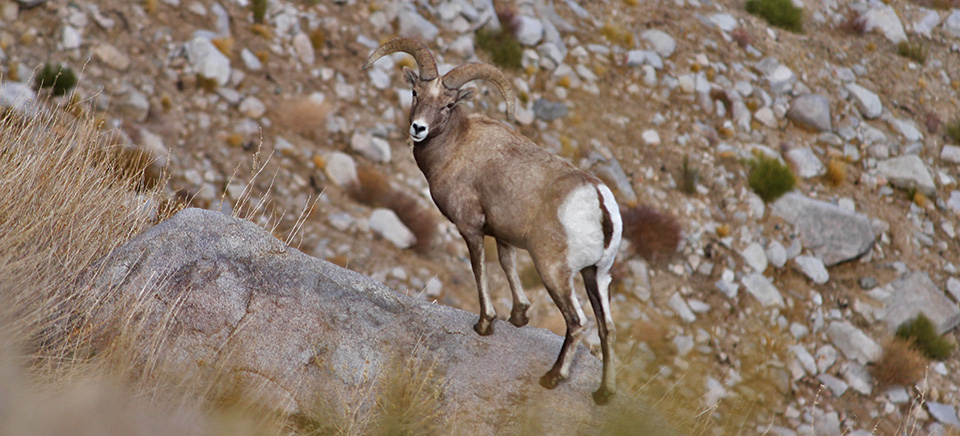
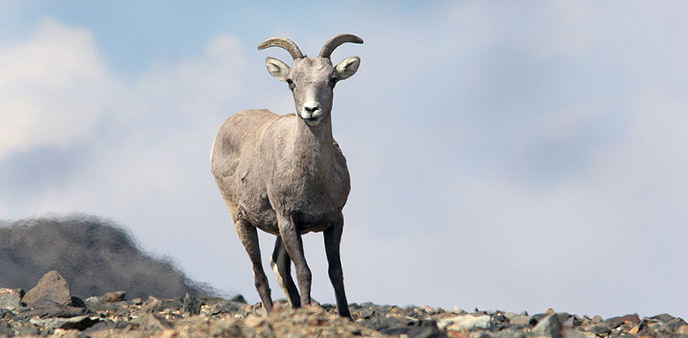
The Sierra Nevada Bighorn Sheep is a relatively large (adult males range from 120-220 pounds, adult females from 100-155 pounds) sheep that inhabits California’s Sierra Nevada Mountain Range, hence their scientific name Ovis canadensis sierrae (“Sheep Facts”). They are close relatives of the other two types of bighorn sheep that share a similar habitat in the United States, the Rocky Mountain bighorn sheep and the Desert bighorn sheep (“Natural History”). As they are genetically different from these other species, however, they are their own distinct subspecies of bighorn sheep (USFWS).

Since they inhabit steep, rocky ranges, they are very agile and have short legs and stocky builds to make them better adapted to navigating in the challenging Sierra terrain; they range in elevation from over 4,000 meters during the summer to in some cases as low as 1,450 meters during the winters (USFWS). They spread out over such a wide range in order to ensure that they get enough food — they are herbivores, but have very flexible diets and will eat whatever is available and most nutritious based on where they are and the season (USFWS).

The Sierra Nevada Bighorn Sheep lives in groups, which affords them protection from predators and allows them to graze more efficiently. They have very sharp eyesight, which is their primary means of detecting predators; they are frequently preyed on when they move to lower elevations during the winter, and especially by mountain lions, which account for the majority of bighorn fatalities (USFWS). Bighorns typically do not move between herds on their own, and males and females live in separate groups, only coming together in late fall to breed; since females typically only give birth to a single young, so their population is especially vulnerable to outside risks like predation and disease as it is still so small in size (USFWS).


Geographic and Population Changes
One of the biggest limitations on the population of Sierra Nevada bighorns are outside factors, especially disease and predation. As mentioned previously, one of their largest predators is the mountain lion, which has kept bighorn population sizes small. They are also extremely susceptible to pneumonia, which is considered the most significant disease for bighorn sheep  and can be contracted from contact with domestic sheep, in addition to other illnesses that negatively impact Sierra Nevada bighorns like scabies (USFWS). Human impacts today on the species are thought to be relatively negligible, though initial hunting when humans first moved into the Sierra Nevadas likely reduced the bighorn population from what it was before human contact.

Historical and current ranges of the
Sierra Nevada Bighorn Sheep.
Source: http://www.dfg.ca.gov/snbs/images/maps/
SNBS_herd_units_and_historical_loc.jpg
Their population prior to settlement is unknown, but it is thought to have been just over a thousand sheep, with losses starting to occur shortly after European immigration to the areas typically inhabited by bighorns in the middle of the nineteenth century, largely thought to be due to diseases brought by the domestic animals of the Europeans (USFWS). More recently, however, the bighorn population has drastically declined, reaching an all-time low of just over 100 sheep in 1995, down from the previous low point of nearly 300 bighorns in 1985. This is largely due to the change in bighorn behavior that occurred around this time in which they stopped descending to lower elevations to spend the winter, likely due to predation by mountain lions (USFWS). Due to harsh winter weather conditions at higher elevations and less abundance of food, bighorn survival took a big hit due to these changes in range behavior and while the population is now growing again, it is still well below its targets for delisting and covers a much smaller range geographically today than it did historically.


Listing Date and Type of Listing
The Sierra Nevada Bighorn Sheep was listed as endangered under the California Endangered Species Act in 1999, and was later listed as endangered by the U.S. Fish and Wildlife Service on January 3, 2000 (USFWS).


Source: https://static1.squarespace.com/static/54e7bed2e4b02e8e02306292/
t/54ed4e8ee4b0d2dd2df57a33/1424838355802/IMG_0898.jpg?format=1500w


Cause of Listing and Main Threats
Neither the habitat of the Sierra Nevada Bighorn Sheep, which has remained largely undisturbed from its initial condition before settlement, nor overuse by humans have had very important impacts on the bighorn population, so neither of those were considered reasons for listing it as endangered. Its main reasons for listing were the potential for diseases to be transmitted to wild bighorns from domesticated sheep and goats (as bighorns are incredibly susceptible to these diseases), predation from mountain lions in their winter ranges, and the current lack of policies in place that reduce contact between domestic animals and bighorn sheep (USFWS). The incredibly small size of the population was also another incentive to listing them as endangered, as it makes them all the more vulnerable for extinction because of these diseases and predators.


Recovery Plan
As stated in the U.S. Fish and Widlife Service’s Recovery Plan for the Sierra Nevada Bighorn Sheep, the goal is to both recover the population to a size that can sustain itself across most of its historic range while maintaining enough genetic diversity to ensure it stays distinct from other sheep species, as well as put programs in place to protect them to threats that might arise following their delisting.

Source: https://static1.squarespace.com/static/
54e7bed2e4b02e8e02306292/t/54e7c927e4b07c01c5b7b3d5/
1424476520516/tumblr_mn8b8sLRb61rkz363o1_1280.jpg
In order to be downlisted to threatened, there must be both 305 females over one year old across the range’s four Recovery Units (areas designated to break up the population’s recovery based on geographically distinct regions of their historic range), as well as policies put in place that eliminate contact between domestic sheep and goats and wild bighorns (USFWS). In order to be delisted entirely, the above criteria need to be met, but the required female population must be maintained for at least seven years without human help; bighorns need to be found in at least twelve herds in total across the four Recovery Units; all populations in Recovery Units must be thought to be able to continue supporting themselves without human help; and regulations and land protections must be put in place to protect the species and their summer and winter ranges long-term (USFWS).

The U.S. Fish and Wildlife Service’s Recovery Plan contains eight action items in order to ensure successful recovery of the Sierra Nevada Bighorn Sheep, the first of which is protecting bighorn habitat by both maintaining the habitat that is already owned and protected by the state, as well as attempting to buy up privately-held land that is in the bighorn’s range. The second action item is to increase the population growth of bighorns by ensuring they have a higher chance of surviving overall, as well as a greater chance of reproducing successfully; they plan to achieve this by monitoring and removing predators from bighorn ranges, increasing bighorns’ use of lower-elevation habitat during the winters, and minimizing contact between bighorns and domestic animals so they have a lesser chance of getting sick from diseases. The third goal is to increase the number of herds and sheep overall across the population by relocating bighorns from thriving areas (whether that be in the wild or through a captive breeding program) to those that need to have a herd reestablished. The fourth item is to implement a plan to monitor and maintain the species’ genetic diversity. The fifth goal is to monitor the sheep and their habitat to collect data and look for trends in population size and distribution, their habitat, and the threats to bighorns’ survival. The sixth goal is to research more deeply various aspects of bighorn ecology, behavior, and the effects of their interactions with the environment, predators, and humans, as well as the potential effects that climate change could have on bighorn survival. The seventh item is to engage the public by educating them, conducting a survey of how bighorn habitat is used by people and their attitudes towards Sierra Nevada bighorns, and working to update existing programs as needs change. Lastly, they aim to create an advisory team to coordinate communications and actions between Federal, state, private, and specialist groups that are involved in helping protect bighorns.


Source: https://www.nps.gov/yose/learn/nature/images/ram_SteveYeagerweb.jpg


What You Can Do
While human influence hasn’t had too much of an impact on the recent survival of the Sierra Nevada Bighorn Sheep, that doesn’t mean there’s nothing you can do to help them as a species. One of the action items listed above in the Recovery Plan is public outreach and education, and you as an individual can play a big part in helping to educate people about and advocate for the Sierra Nevada bighorn. If you live in an area close to bighorn habitat, make sure that your friends, neighbors and others in your community know about the bighorn and take active steps to ensure the preservation of their habitat by being mindful of how they use the land if they are in bighorns’ range. If you have domestic animals, take steps to fence or otherwise contain them and prevent contact with wild bighorn to reduce the chance of accidental transmission of disease to wild bighorn sheep.

Several groups also advocate for the preservation of Sierra Nevada Bighorn Sheep, including the Sierra Nevada Bighorn Sheep Foundation (www.sierrabighorn.org) and supporting them either financially or by advocating on their behalf is a great way to help protect this species. The Foundation also has a Citizen Science program which encourages hikers and outdoor enthusiasts to report sightings of bighorns, which helps the foundation monitor bighorns throughout their ranges. If you’d like to get involved, visit their website (linked above). Lastly, another great way to help protect bighorns is to reach out to your local government representative and express your interest in conserving Sierra Nevada bighorns; by encouraging them to support legislation that protects wild places like bighorn habitat, reduces private sales of land in bighorn habitat, or provides more funding for conservation efforts, your voice can have a lasting impact on the long-term survival of Sierra Nevada Bighorn Sheep.


Source: https://www.nps.gov/seki/learn/nature/images/8682115810_7f7b0da5b0_b_1.jpg


Additional Resources
If you’d like to learn more about Sierra Nevada Bighorn Sheep or take steps to get involved with species conservation, take a look at the resources listed below.
Sierra Nevada Bighorn Sheep Foundation
www.sierrabighorn.org
Sierra Nevada Bighorn Sheep in Yosemite National Park
www.nps.gov/yose/learn/nature/sheep.htm
U.S. Fish and Wildlife Service: Sierra Nevada Bighorn Sheep
www.fws.gov/nevada/protected_species/mammals/species/sn_bighorn_sheep.html
California Department of Fish and Wildlife: Sierra Nevada Bighorn Sheep Program
http://www.dfg.ca.gov/SNBS/

Center for Biological Diversity: Sierra Nevada Bighorn Sheep
www.biologicaldiversity.org/species/mammals/Sierra_Nevada_bighorn_sheep/index.html


Works Cited
Cassel, Bonnie. "Sierra Nevada Bighorn Sheep in Yosemite National Park." Yosemite National Park. National Park Service, 3 Aug. 2017. Web.
"Natural History." Sierra Nevada Bighorn Sheep Foundation. Sierra Nevada Bighorn Sheep Foundation, n.d. Web.
"Sierra Nevada Bighorn Sheep Facts." California Department of Fish and Wildlife. California Department of Fish and Wildlife, n.d. Web.

U.S. Fish and Wildlife Service. Recovery Plan for the Sierra Nevada Bighorn Sheep. Sacramento, California, 2007. xiv + 199 pages. Web.