Emily Budd
Tiger
(Panthera Tigris)
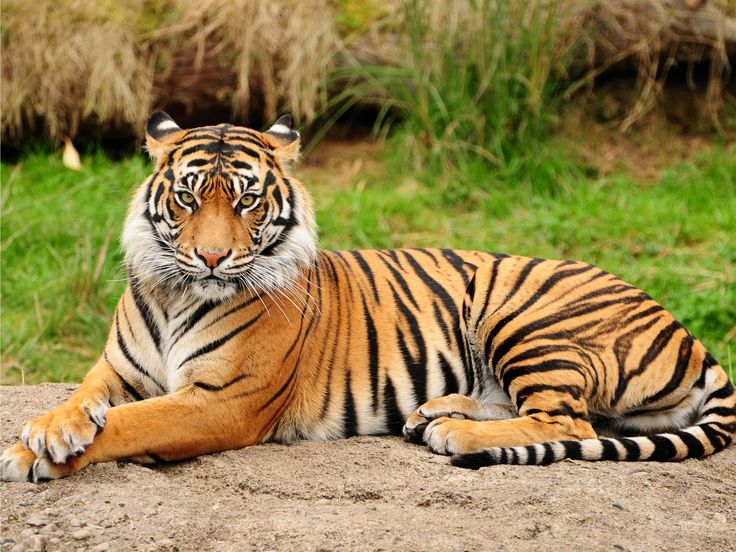
Description and Ecology of the Tiger
This iconic creature, the tiger (panthera tigris) is the largest cat of the cat species. They have red/orange fur with a lighter underside and distinct, dark, vertical stripes. These cats are territorial and generally solitary, yet social animals. These are also apex predators. They require large continuous areas of habitat that support their living requirements as well as their prey requirements. They are indigenous to some of the most densely populated areas on Earth. They range across eastern Eurasia. Tigers are important to cultures in Asia and around the world.
Geographic and Population Changes

Over the past 100 years there has been a 93% loss of the tigers historic range. This is in eastern Eurasia. They live in tropical rainforests, mangrove swamps,evergreen forests, temperate forests, grasslands and savannas. This includes, but isn't limited to Africa, India, Thailand and Cambodia. There used to be 100,000 tigers at the start of the 20th century, now there are only around 3,200-3,500 living. The remaining population live in
small pockets isolated from each other. Much of the habitat has been destroyed due to clearing forests and grasslands for agriculture, commercial logging and recently, the rapid infrastructure development.

Listing Date and Type
The tiger was listed as “endangered” by the international Union for Conservation of Nature (IUCN) in 2010. The St. Petersburg declaration on Tiger Conservation declared
a plan on November 23, 2010.
Cause of Listing and Main Threats
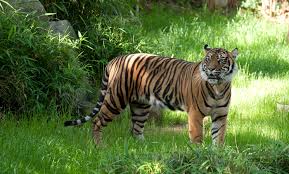
The major cause of their listing and their main threats are due to habitat loss, poaching, illegal wildlife trade and human-tiger conflict. Habitat degradation and fragmentation is largely driven by clearing forests and grasslands for agriculture, commercial logging, and recently the rapid infrastructure development. This is leaving tigers no place to live and it's making it very hard for them to find food. Poaching, the illegal wildlife trade, and trafficking for their parts are all driven by consumer demand is a primary and immediate threat to their survival as well. Tigers have been extirpated due to poaching in areas where they had excellent habitat. The majority of countries and states have legislation in place to help protect tigers from poachers, due to the lack of resources the enforcement of these laws is not very effective. They have inadequate patrolling and are unable to make an impact on the poachers. Their prey on which they depend on has also been reduced throughout much of their range.
Recovery Plan
The goals of the Recovery plan are to reverse the rapid decline of wild tigers and aim to double the number of wild tigers by 2022. This would mean going from the current number of tigers, 3,200 to ideally around 6,800. In order for this to happen certain new policies have to be implemented. These are to improve legal protection of critical tiger habitats and increase penalties to anyone who commits wildlife crime. Implement a stronger legal basis for making critical tiger habitats more protected. These countries need to establish the best management practices for infrastructure and industry development in buffer zones. They also need to increase sharing benefits from any conservation efforts in these buffer zones. These countries must develop policies for a captive tiger monitoring and registration system and breeding management plans. They must strengthen policy for transboundary management of shared landscape and collaboration in law enforcement. And finally these countries must establish new policies for financing to ensure adequate transfers for ecosystem services for tiger landscapes.
Institutionally these countries must create separate and specialized wildlife conservation and enforcement units. They also must support the frontline staff with equipment, infrastructure, training, incentives and insurance.

What can we do?
One of the biggest things we as individuals can do for this problem is to never support any business that exploits these animals. A huge issue for the survival of these tigers is from poaching, the illegal wildlife trade, and trafficking for their parts. Tigers have even been extirpated from areas where they had perfect habitat solely due to poaching. This industry is all driven by consumer demand. Its simple economics, in the demand goes down, so will the supply and intern less tigers will be exploited through this cruel trade. There should be a global social push for the negative attitudes surrounding tiger products. They shouldn't be a sign of wealth, they should be frowned upon. They people who purchase these products and drive the demand up for them are doing it for an image. So if socially it was frowned upon the demand would go down.
We can also support the organizations that are putting in the effort and costs into the restoration of the tiger. Many of the efforts must lie on the countries who have tiger territories, but donating to the organizations that are helping these countries would have a huge positive impact. These organizations include National Geographic, Smithsonian, Wildlife Conservation Society, the World Wildlife Foundation, Traffic, Freeland, IUCN, and Asen-Wen.
Other Resources
The Fate of Wild Tiger
Setting Priorities for Tiger Conservation
Defenders of Wildlife
World Wildlife Foundation
Work Cited
Eric W. Sanderson1, Jessica Forrest1, Colby Loucks2,Joshua Ginsberg1, Eric Dinerstein2, John Seidensticker3Peter Leimgruber^, Melissa Songer^, Andrea Heydlauff,Timothy O'Brien1, Gosia Bryja1, Sybille Klenzendorf,and Eric Wikramanayake2. “Setting Priorities for tiger conservation” (PDF) Repository.si.edu. 2010
Dinerstein, E.; Loucks, C.; Wikramanayake, E.; Ginsberg, Jo.; Sanderson, E.; Seidensticker, J.; Forrest, J.; Bryja, G.; Heydlauff, "The Fate of Wild Tigers" (PDF). BioScience. 25 April 2012.
“Global Tiger Recovery Program” (PDF). voices.nationalgeographic.org. March 2011